Designed here. Built here.
Most soda makers are designed in one country and built in another, by people who never saw the drawing. Ours aren’t.
Part A — Design
We start at the drawing.
- An 8-person R&D team — mechanical and electronic engineers among them.
- 10% of annual revenue goes back into R&D. Every year.
- 60 granted patents across 4° and MIA — 56 of them in force today — including automatic and variable-speed pressure release, downward injection, and carbonating mixed liquids. Download the full list (PDF)
What we actually design for: carbonating a mixed drink without it foaming over. Parts that stay safe when the pressure is real. A wide-mouth bottle you can drop fruit into — and clean afterwards.
We took the PET bottle out of the equation — and the guesswork with it.
The mechanism should feel the same on the first press and the thousandth.
More gas dissolves, less gas is wasted — up to 30% better CO₂ dissolution.
Design → Product
The drawing on the left. The machine we ship on the right.
On the left is a drawing from one of our own granted patents — the same lines our toolmakers worked from. On the right is that machine as it leaves our factory. Drag the line.
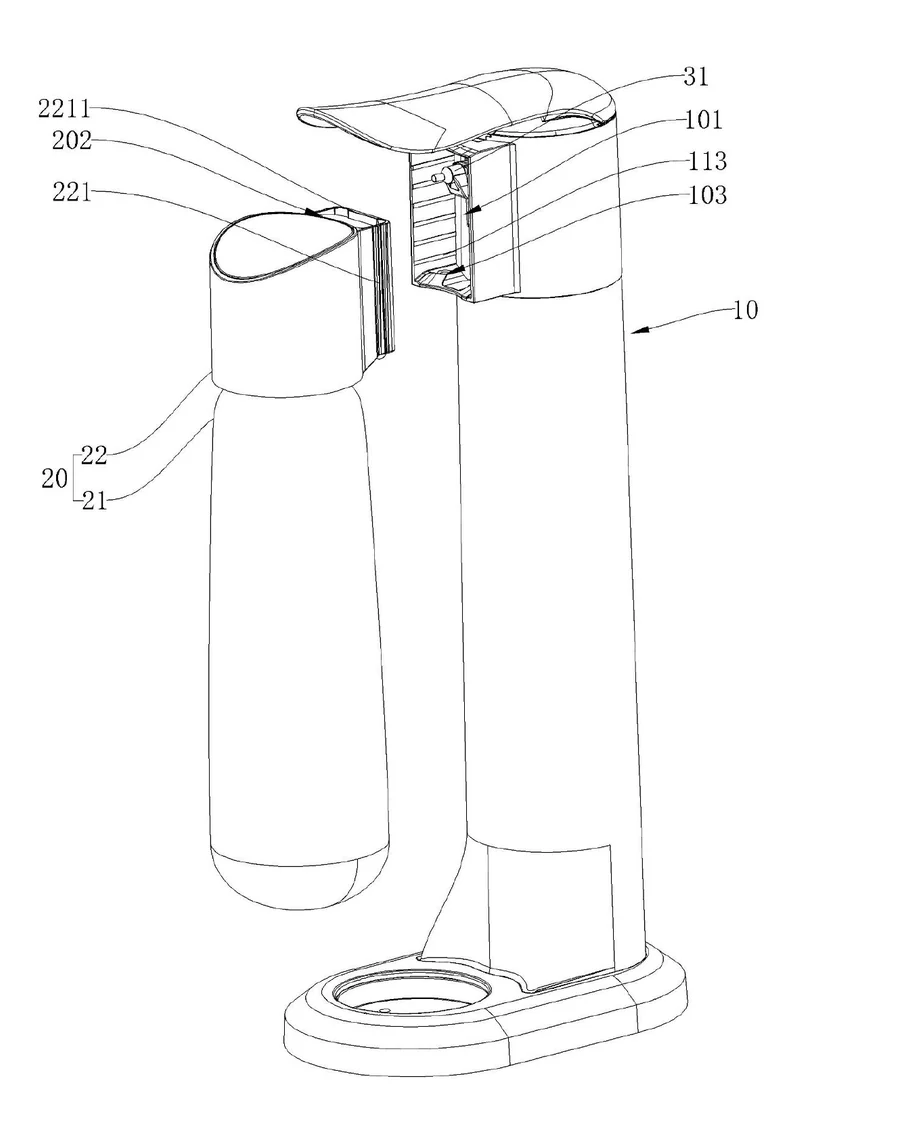
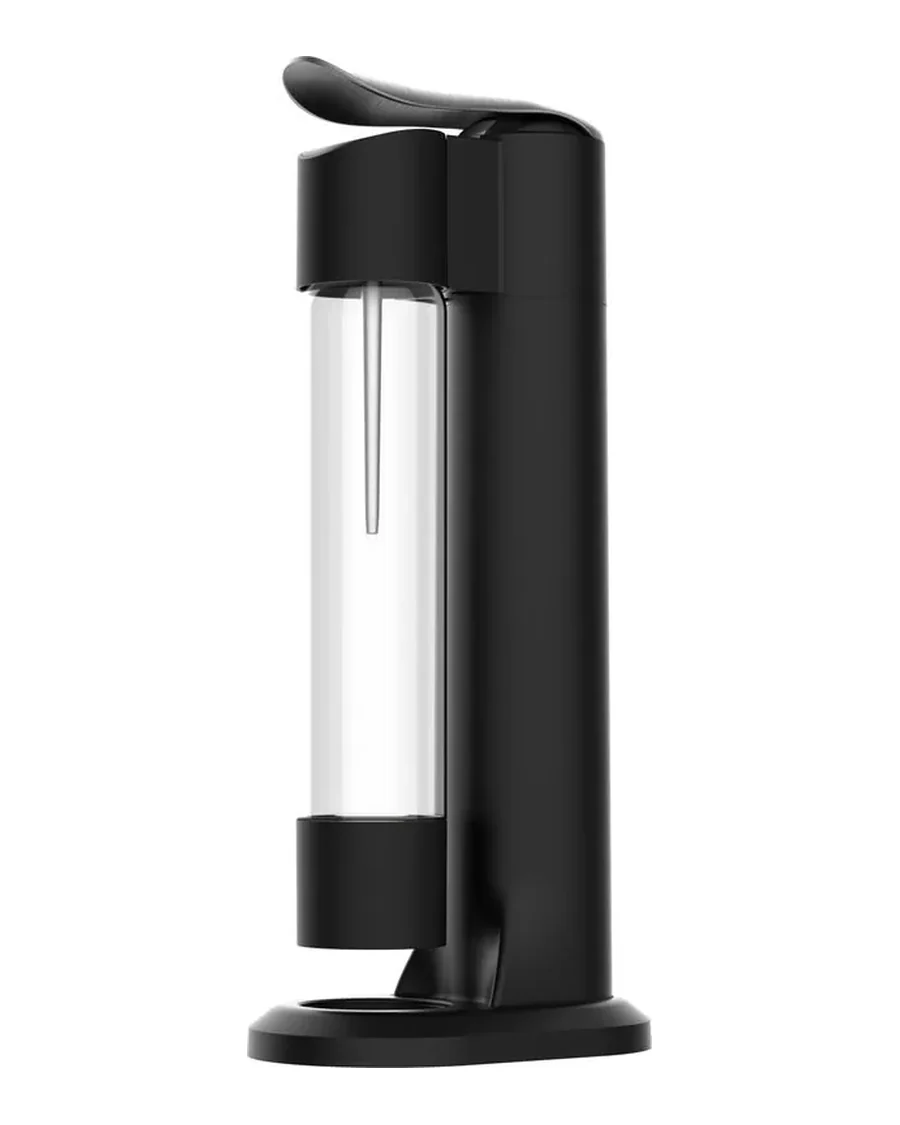 Patent drawing Shipped unit
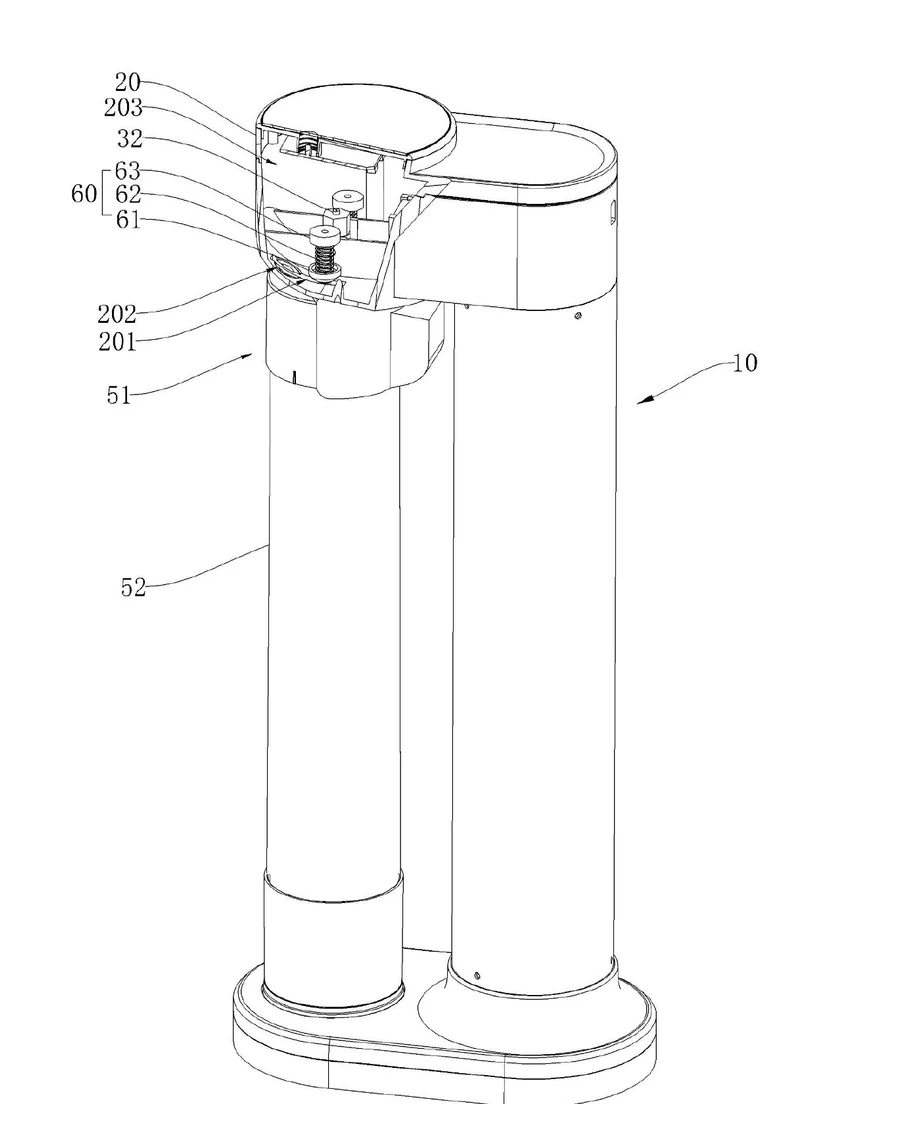
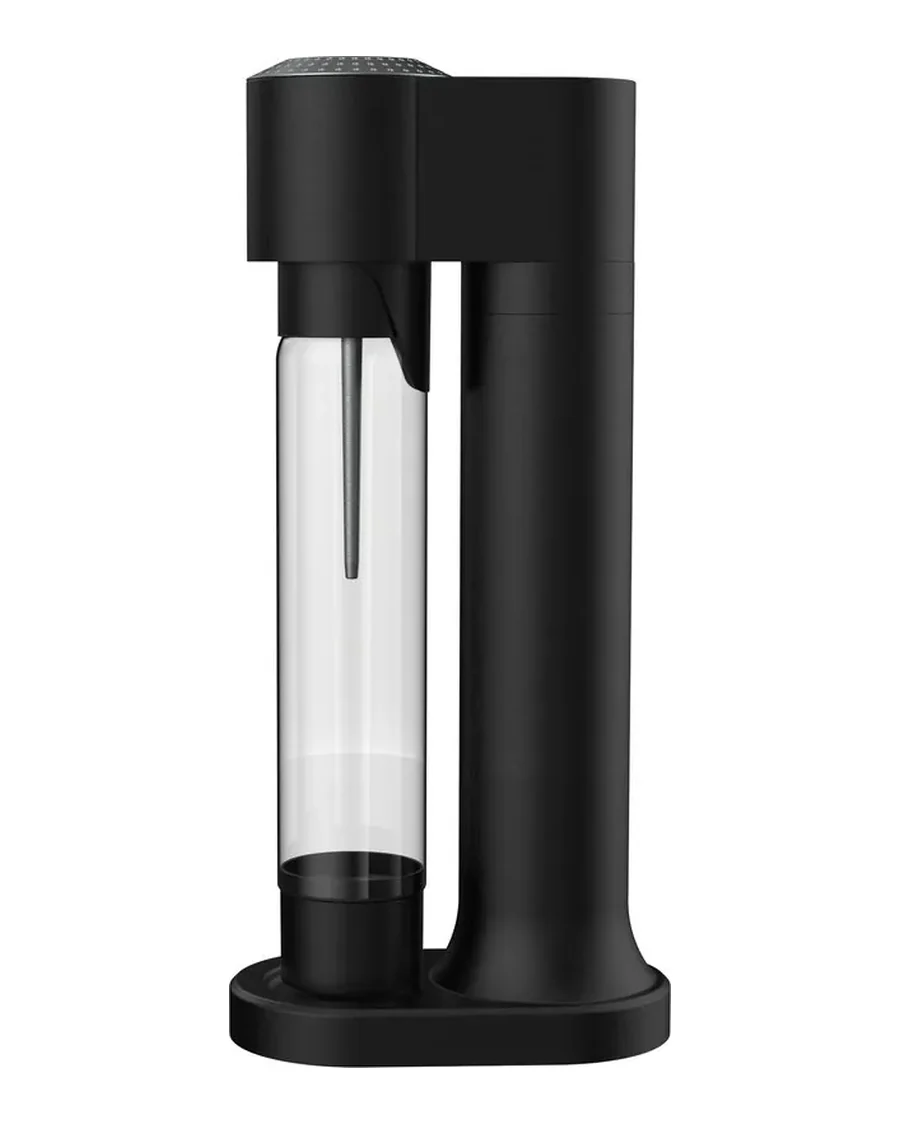 Patent drawing Shipped unit
Structure, drawings, prototypes, tooling, volume — the whole sequence, illustrated with drawings from our own granted patents.
See how a drawing becomes a product →The same team designs our booths, too.
Same habit: the render first, then we build to it.

 3D render Built on site

 3D render Built on site
- Concept
- 3D model
- Shop drawings
- Prototype
- On site
Part B — Made
So how is a machine actually made?
Other websites sell a lifestyle. We sell manufacturing — because what you are buying is not a machine, it is a factory. Here are the six questions buyers ask us most; answer them and you know who you are placing the order with.
- Structure →
- Styling →
- Drawings →
- Prototype →
- Tooling →
- Trial run →
- Mass production →
- Sub-assembly →
- Final assembly →
- Shipping
So how does a soda maker actually get built here?
Structure first: how the gas goes in, how it releases, how the bottle locks. The styling grows out of that structure — we do not draw a pretty shell and then look for somewhere to put the parts. Then drawings, a working prototype, tooling, a trial run, and only then mass production. Production itself runs in two stages: sub-assembly, then final assembly. We draw the drawings ourselves, and the people building the machine stand on the same floor — there is no "designed in country A, made in country B, nobody has seen the drawing" here.
What is actually different about you?
Other people buy bottles. We blow our own: a 300 m² clean workshop, our own food-grade PET preform injection (IP5X dust-proof), multi-stage heating so every bottle comes out with the same wall thickness — 3,200 bottles a day. But we are not only bottles: the machine is built in the same 5,000 m² factory, where injection, blow moulding, silk-screen printing, assembly, inspection and packing all sit under one roof. The bottle is one link in the chain — the whole chain is ours.
How do you actually control quality?
Two 100% high-pressure tests, no sampling at either. The first is at sub-assembly: the carbonation and release components — the infuser, the head — get a 100% pressure inspection as soon as they are assembled. The second is at final assembly: once the machine is complete and the bottle is fitted, every single unit is pressure-tested again. On the bottle side, every production run gets a 2 MPa destructive burst test — which is why we can promise 1.8 MPa without bursting. None of this is "we are very careful"; it is what the line does.
How big are you? Will you take one order and disappear?
5,000 m² of factory, 2,000 machines a day, 3,200 bottles a day, 8 engineers — and you can see who is working on your order on your own project page — plus 60 granted patents across 4° and MIA, 56 of them still in force. Capacity and certificates are the hardest things to fake. Come and look, or send someone who will.
Given how China is viewed right now, why should we trust you?
An article will not change anyone’s mind, so here are three things you can check yourself. ① Certificate originals and the patent list — public, downloadable, verifiable. ② The right to inspect — our customers already run AQL inspections and write penalty clauses into the contract; do the same with us, we will cooperate. ③ People — R&D, quality and your contact sit on the same floor, and the person answering your email is the person building the thing.
SodaStream and Drinkmate do not explain how they build. Is it odd that you do?
No, because we are not the same kind of company. They sell to consumers, so they sell a lifestyle. We sell to brands and distributors like you — and what you are evaluating is a factory, not a slogan. Showing the process is the opening of a business conversation, not a gimmick.
Part C — Inside
The plant, as it is.
Not stock photography. These are our own floors and our own people, shot on a normal working day.


Part D
Why this matters to you
Your request doesn’t have to survive a translation layer.
The engineer who drew the part is in the same building as the line that makes it.
When something goes wrong, it gets fixed at the source.
No ticket to a third party, no waiting for someone who has never seen the inside of the machine.
We are slower on purpose.
We are not the fastest factory you will talk to. We take the time to get the press of a button, the weight of a bottle and the sound of the pressure release right. You’ll feel it on your counter, every day.